Core Insights
- Legal requirement: Under section 658 of the Companies Ordinance (Cap. 622), every company incorporated in Hong Kong must declare a valid local registered address in the NNC1 form.
- Usage restrictions: Title deeds and tenancy contracts specify whether premises are industrial, commercial, or residential. Using the wrong type can trigger penalties during government inspections.
- Permanent record impact: Amendments to company records are permanent. If you start with an invalid registered address, banks and investors will see the correction in your file.
- Strategic choice: A low-grade registered address may save a few hundred dollars upfront, but it can signal to investors and partners that the company is budget-tier or misaligned with international standards.
What is a Registered Business (Virtual) Address in Hong Kong?
A registered business address (often called a virtual address) is legally required under section 658 of the Companies Ordinance (Cap. 622). You must declare it in the NNC1 form at incorporation. In practice, the address should be a commercial address because title deeds and tenancy contracts in Hong Kong clearly restrict usage by type (industrial, commercial, or residential).
A common misconception is that any address will do. The government conducts random inspections. While some companies may slip through initially, once an officer identifies a mismatch, penalties can be enforced. More importantly, amendments to company records are permanent. Banks and investors reviewing your Companies Registry file will see that the company started with an incorrect address. That early error can undermine credibility.
Choosing a reliable TCSP licensee helps avoid these problems. Based on experience serving over 46,000 clients, the practical advice is straightforward: invest in the right address from the beginning. The cost difference between address tiers is often only a few hundred dollars, while the reputational cost of a wrong filing can be significantly higher.
Why a Central Registered Address Matters?
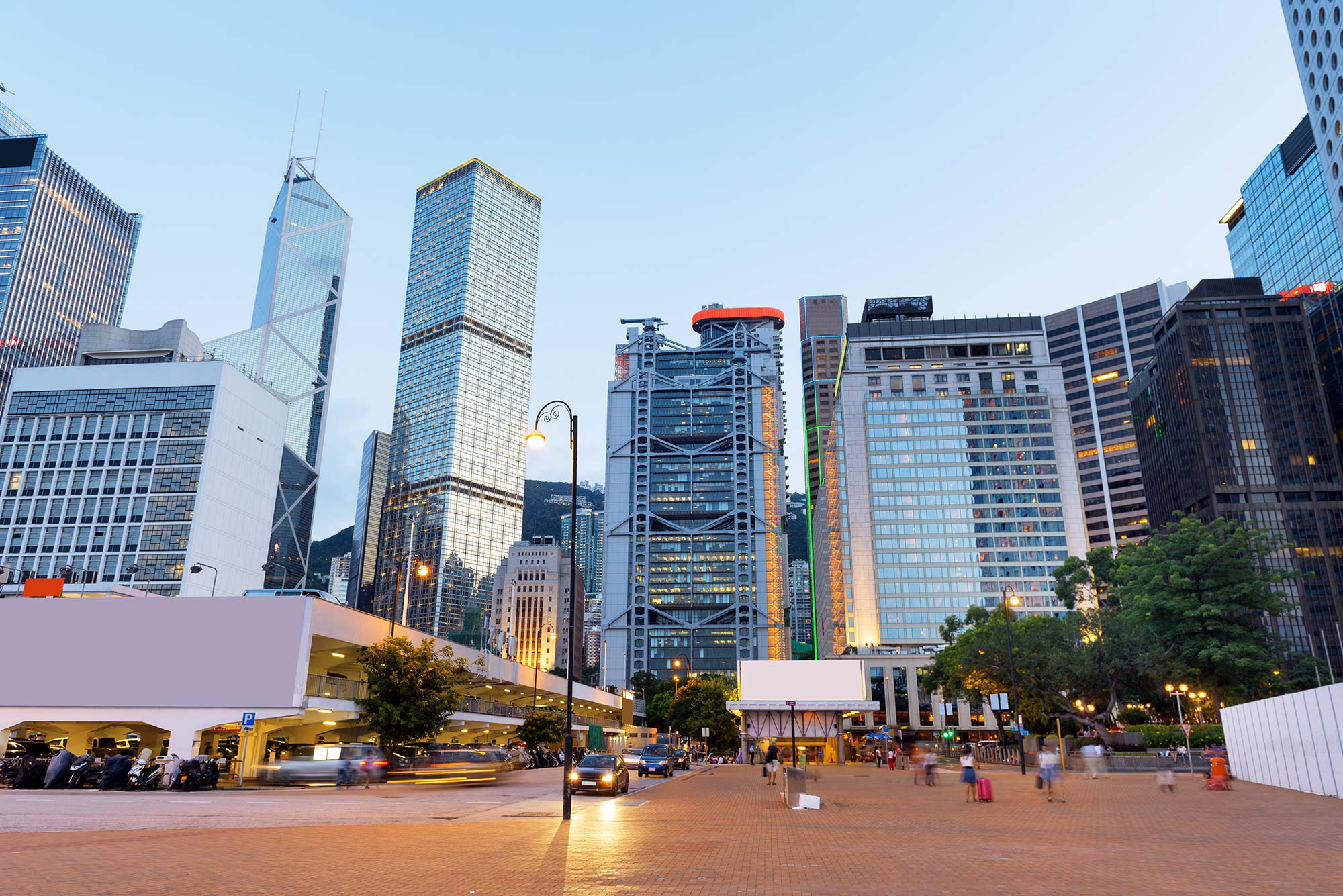
Registering your company at a Central address (such as World Trust Tower, Stanley Street) places you in Hong Kong’s core business district. According to CBRE MarketView data, Central remains the most prestigious location for international firms. For investors and bankers reviewing company records, a Central address is commonly interpreted as a signal of stability and professionalism.
Our service goes beyond providing the address itself:
- Government correspondence is scanned and forwarded at no extra cost.
- Non-government mail can be handled via flexible scanning packs starting at US$80, with secure digital access.
- We also guide you on the necessary follow-up actions so you stay compliant and maintain a clean record.
Top Districts for a Registered Business Address in Hong Kong
The district you choose does more than satisfy a legal requirement, it sends a signal about credibility, financial strength, and brand positioning. Hong Kong is divided into three main regions (Hong Kong Island, Kowloon, and the New Territories), each with distinct reputations, rent levels, and talent dynamics. Understanding these differences is especially important for expats and international firms.
Hong Kong Island (Central, Admiralty, Wan Chai)
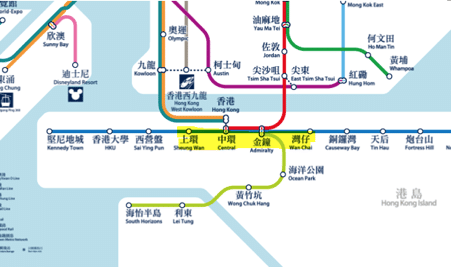
Central, Admiralty, and Wan Chai remain the most expensive and prestigious districts. CBRE data shows Grade A rents in these areas are the highest in the city. Salaries are also the highest according to Census & Statistics Department figures, and crime rates are among the lowest.
Accessibility reinforces prestige. Central, Admiralty, Wan Chai, and Sheung Wan form the core MTR transport hub. Offices within walking distance of these stations are generally perceived as more international and convenient.
Many expats prefer these districts because the environment feels international and secure. However, the atmosphere can change quickly. Moving just one or two stations away (for example to Fortress Hill) can shift the perception from international business district to more residential. Locals immediately recognise these differences in the same way they distinguish exclusive cocktail lounges from community-focused or lower-tier venues.
Beyond the rent figures, a Central address carries a practical market signal. Local talent, banks, and investors commonly interpret it as evidence that the company is established, sizable, and internationally oriented, an on-the-ground perception that statistics alone do not fully reflect.
Kowloon (Tsim Sha Tsui, Jordan, Mong Kok, Kowloon East)
Kowloon is often misunderstood by expats because luxury and more modest areas can sit only a few streets apart. CBRE data shows rents are typically around half of Central levels (Tsim Sha Tsui roughly HK$50 per sq ft, Kowloon East closer to HK$25).
Staff in Kowloon often accept slightly lower pay than those on Hong Kong Island. While this can appear as a cost advantage on paper, experienced operators observe that the strongest talent in Hong Kong still strongly prefers Central or Admiralty. Location therefore functions as a practical recruitment signal, not just a rent decision.
Tsim Sha Tsui is widely perceived as projecting luxury through its hotels and high-end retail. One MTR stop away, Jordan is commonly read by locals as more budget-oriented. These sharp perception differences exist even when official statistics show only moderate variation in crime or rent.
For expats, the situation is comparable to football in Manchester: two clubs share the same city, yet their reputations diverge sharply depending on performance and era. In the same way, choosing the wrong district in Kowloon can place a startup on the “struggling side” in the eyes of talent and partners, a market reality that pure data does not fully convey.
New Territories (Tsuen Wan, Tuen Mun, etc.)
The New Territories have traditionally been home to local businesses, light industry, tutorial centres, and community-oriented operations rather than international firms. The environment is more residential. Placing a finance or investment firm in a setting dominated by public estates can create a mismatch between the company’s intended image and its surroundings.
CBRE industrial reports note that rents in areas such as Tsuen Wan and Tuen Mun remain among the most affordable. This makes the New Territories suitable for back-office, warehousing, or cost-sensitive functions, but generally less suitable for client-facing headquarters.
How to Choose a Registered Business Address?
The decision ultimately comes down to signal strength. A Central address does more than place you in expensive towers, it communicates to ambitious professionals that the firm is serious, international, and worth joining. Talent recruitment remains strongest on Hong Kong Island, and proximity to core MTR stations reinforces accessibility and prestige.
Kowloon and the New Territories offer lower rents, but the trade-off is perception. Clients and staff often interpret these districts as more budget-oriented or less aligned with international business. Official statistics alone cannot fully capture how walking through certain streets shapes reputation.
For most expats and global firms, Central remains the safest choice because it aligns brand image, recruitment appeal, and cultural signaling.
Comparison of Registered Address Districts in Hong Kong
| Region / Districts | Rent (Grade A Office) | Salary Levels | Crime Statistics | Perception / Image |
| Hong Kong Island (Central, Admiralty, Wan Chai) | HK$100+ per sq ft (CBRE MarketView Q2 2026) | Highest in city | Among the lowest crime rates citywide (HK Police Force 2026) | Prestigious, international, strongest credibility signal |
| Kowloon (Tsim Sha Tsui, Kowloon East, Mong Kok) | HK$25–50 per sq ft (CBRE MarketView Q2 2026) | Slightly lower | Still low overall, but relatively higher rates of certain street crimes | Mixed: luxury in TST, more budget-oriented in other parts |
| New Territories (Tsuen Wan, Tuen Mun) | Most affordable rents (CBRE Industrial Report 2026) | Lower | Generally safe, more residential | Suitable for back-office / warehousing; less aligned with client-facing HQs |
How the Registered Address Service Works?
Email notification and Scanning
You receive an email whenever mail arrives for your company. All government correspondence is scanned and sent free of charge. Non-government mail can be covered by flexible scanning packs starting at US$80, with a dedicated secure folder.
Mail Forwarding
Physical mail can be forwarded via HK Speedpost, FedEx, DHL, or SF Express. Speedpost typically reaches major countries within five business days; FedEx and DHL often deliver within 1–2 business days.
Switching your Address
Companies transferring their registered address to Get Started HK can use discounted packages starting from US$168. No physical visit to Hong Kong is required. The process usually takes 5–7 business days (urgent cases can be expedited). A complimentary company health check is included once the change is completed.
Frequently Asked Questions
1. What is the difference between a registered address and business address in Hong Kong?
The terms are often used interchangeably. Both refer to an address used for compliance and for receiving company mail. A registered office address is managed by staff of your corporate service provider and is not a space for physical operations, warehousing, or daily work.
2. How do I change my business address in Hong Kong?
Pass a board resolution approving the change and keep a written record. Within 15 days, file Form NR1 (Notice of Change of Address of Registered Office) with the Companies Registry. You will then receive an updated Business Registration Certificate at the new address.
3. Can I put the registered office address in my name card, letterhead or website?
Yes. You may use the virtual address on name cards, letterheads, and websites. However, the service provider will not greet walk-in customers on your behalf. The address is for registration and mailing purposes only.
4. After I make the payment, how fast can I use Get Started HK’s registered address?
In most cases the address can be used shortly after payment and confirmation. Exact timing depends on the package and whether a company change of address is also required.
5. Can I use a residential address as my registered office in Hong Kong?
While section 658 of the Companies Ordinance permits a local physical address, using a residential address is strongly discouraged. Tenancy restrictions, Deed of Mutual Covenant (DMC) rules, privacy concerns, and bank compliance checks make residential addresses risky in practice.
6. What happens if I register with the wrong type of address?
If you use an invalid registered address, the government may enforce penalties, and you will need to file an amendment with the Companies Registry. Importantly, amendments are permanent, banks, investors, and partners reviewing your file will see that your company started with the wrong address. This can undermine credibility and signal poor compliance practices.
Start Your Hong Kong Company
- 0% Corporate Tax for Offshore Profit.
- 0% Value Added Tax (VAT).
- 0% Capital Gain Tax.

Company Secretarial Service
Our comprehensive support which allows your company to operate efficiently without physical presence in Hong Kong.
Registered Business Address
Our company formation packages include a registered address service prepared for you hassle-free.